There are a lot of great bands and artists out there who want to make a fantastic recording. But many of the artists, bands and musicians who get in touch with me, often get confused with the different parts of the process, the terms used and who they should hire to do what. Many people don’t know the distinction between mixing and mastering, haven’t considered pre-production or have never even heard of important parts of the recoding process. Hopefully, this brief overview will bring some clarity to the different stages and jobs in the record-making process.
We decide → we build → we capture → we refine → we finish
In this article, I’m going to provide a brief overview of all of the stages of making a good record – from conception to sale. No matter if you’re a band or solo artist, what kind of music you do or what your budget is, this time-tested process will have you making better records that you and your audience can enjoy.
This is by no-means an exhaustive list of every possible audio-production role, nor is it set in stone as the only way to make a record. Much of it comes from my own experiences from working with artists, my exposure to, and knowledge of the different aspects of working with recorded music.
At a later date, I’ll release a series of articles discussing each of these stages in much more detail, but for now I just want to give a brief description of each stage, what the terms mean, what you should aim to accomplish in each one and what kind of professionals can help you along the way.
The process can be broken down into the following stages:
Cutting corners at any stage can affect the outcome of the record in a big way. It’s important to give each stage your full attention and thoroughly complete each before moving on to the next. For the sake of five minuets, hours can saved later.
So without further ado, let’s get going!
Stage 1 – Writing: Songwriting and Pre-Production

Before making a record most people have lots of ideas for songs. Bands might have rough demos of tracks and song ideas, electronic artists may have folders full of ideas. During this initial stage you should select all the songs or tracks for your record from this pool of ideas. Some may be nearly complete, others may be promising but require a lot more work. Either way you should aim to get all of your chosen tracks more or less finished in terms of composition and musical content – this isn’t to say things can’t be changed later but you need a solid foundation on which to build so really think through the piece in a musical way.
Before collecting and tweaking your ideas, it may be helpful to consider the reason for making the record in the first place? Do you want to reach millions of people, do you want to put out a limited edition vinyl, will you give the record away to promote your live shows or are you just doing if for your own enjoyment? Whatever the reason, knowing what you hope to achieve will keep you focused throughout the entire process.
Spend time during this initial stage making sure your songs have strong melodies good arrangements and flow well, keeping the listener engaged. If you like the idea of one song but it doesn’t change, try thinking of some more parts, a bridge or more dynamic section.
At the end of the song writing stage you should feel like all of the lyrics and instrumental parts have been written and you know how the piece is arranged. If you feel like there is anything to add or a piece is not quite there, then you haven’t finished the song writing stage. Either cut the piece from the project or work on it further.
Practicing instrumental and vocal parts is also part of the pre-production process. You should be able to play all the parts proficiently and without mistakes before embarking on the next stage. Often, bands and sometime electronic artists will play their tracks live before making them into a record. This is a great way of getting good at playing them as well as testing audience reactions and getting feedback, provided you’re confident that the tracks are not going to make you look bad at a gig.
Stage 2 – Recording: Tracking, Editing, Overdubbing and Comping

Once you’ve written some songs you’re happy with and decided which ones are going to form the project, it’s time to start getting all the parts down for real. For bands this will often mean hiring a studio and recording engineer – choice of engineer and recording space can greatly influence the final sound of the record. For electronic artists this may just mean putting on new guitar strings and playing the parts again to sound their best, recording all of your live instruments properly, perfecting your synth patches and programming or getting session players in.
Often artists rush the recording phase, studios and engineers can be expensive, and parts must be well rehearsed to get the best performance. These are the most common reasons the cause people to cut corners during recording. Musicians should be able to play their parts well enough that they can focus on feeling and emotion rather than technique during the recording session.
Although arrangements, composition and musical elements were all meticulously laid down during pre-production (weren’t they!) that does not mean you cannot alter them now in the recording phase. Always remain open to new ideas, spontaneity and don’t be afraid to experiment as the production begins to take shape.
While you’re creating all of the musical elements for your piece you should also complete any editing or comping that needs to be done. The advantage of doing this during the tracking phase is that you instantly know what needs to be recorded again. If you comp that take later you might not have what you think you do and getting back into the recording space and mindset may not be easy. Better to make sure all your recordings are top notch and perfected before moving on – this means timing edits, vocal tuning and comping. If your track is electronic I strongly recommend bouncing all of your MIDI down to audio tracks to avoid endless tweaking later on.
Stage 3 – Mixing: Balancing the Sounds
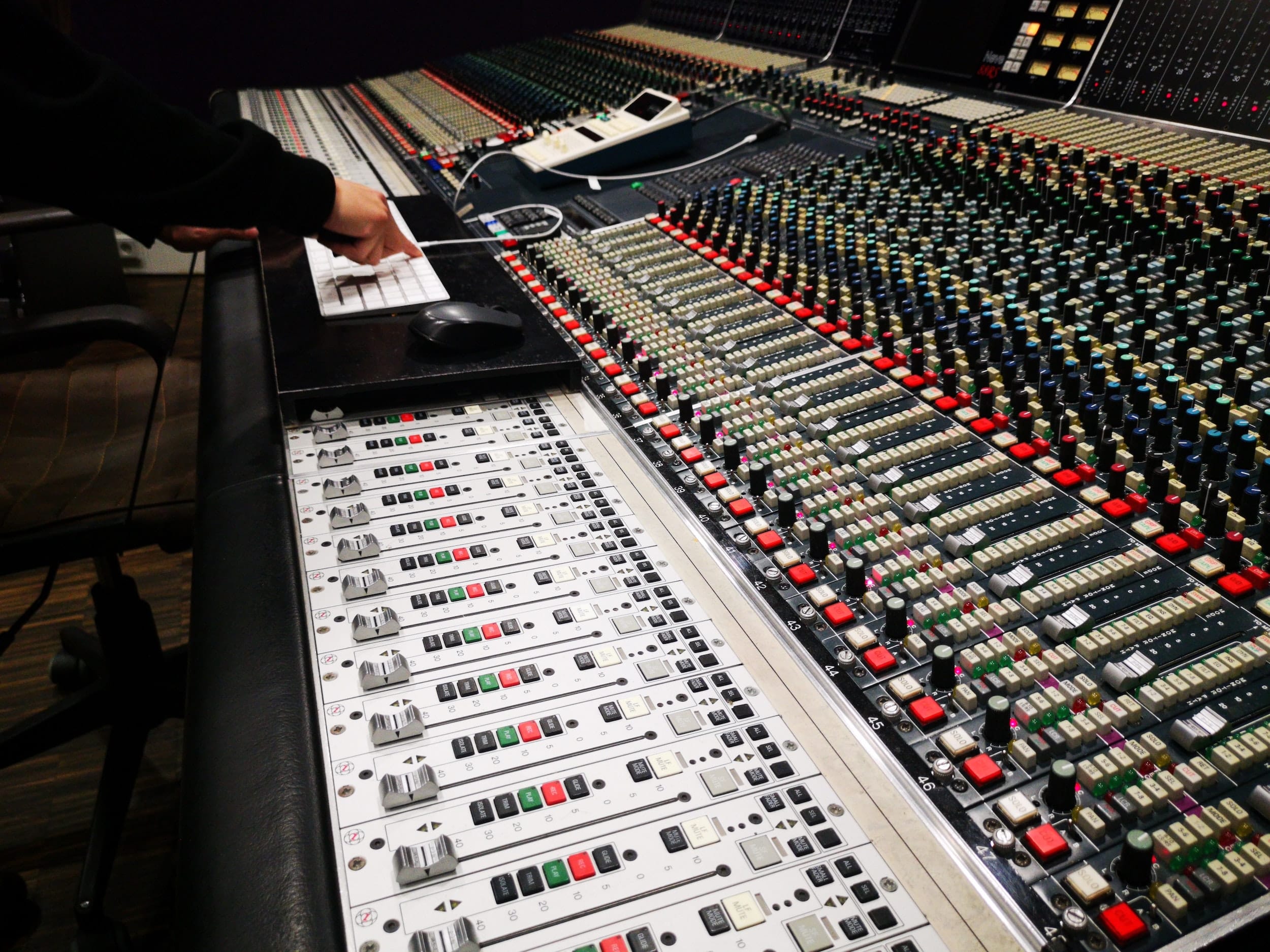
Once you have all of your musical elements on some sort of playback device, it’s time to bring them together to present them in the best possible light. The act of balancing all the musical elements is known as mixing.
The art of mixing is vast and cannot possibly be covered here in any detail. In brief, it is the process of balancing the relative level of each musical element, it’s position in the sound field – frequency, width and depth – and altering the psychoacoustic properties so that the most important parts of the music present themselves properly to the listener at any given time.
Often, bands will get the recording engineer to mix the track. This may or may not be the best idea depending on your engineer and/or project. Some mix engineers excel at their craft and others excel at certain genres, if you’re looking for a particular sound in a certain genre it may well be worth seeking out a mix engineer who can provide what you’re looking for. A bad mix can completely ruin all the work you’ve put into writing and recording the songs, so if you’re on a tight budget you need to choose wisely.
Stage 4 – Mastering – The Final Polish
This penultimate stage of releasing the record is often regarded as the most mysterious. You can’t tell it’s there yet, things come out sounding better than ever. At least, that’s how it seemed to me for a long time. Great masting is transparent. Like mixing, mastering is an extensive topic which I will not even attempt to cover here.
Mastering is the final polishing process before your tracks are released. The aim of mastering is to refine the sonic balance so that it sounds its best wherever it’s played and to prepare the audio for release – this means converting to correct files types, sample rates and bit depths for the release medium, authoring Cd’s, track orders, track overlaps and embedding metadata into the files.
You will need to log ahead a little before getting your tracks master as it is important to know what formats the music will be released on, separate files will need to be created for digital downloads, CD’s and Vinyl.
Choosing a good mastering engineer is also vital, but unlike mix engineers, mastering engineers tend not to specialise in genres. Generally speaking, a good mastering engineer will be good at mastering music in almost any genre.
Sometimes, mix engineers will also master. Whether this happens depends on the engineer and genre of music. Many mix engineers will have spent a long time on the mix and can find it hard to be objective at the mastering stage, so often a fresh set of ears at this point can be very valuable.
Occasionally, a mastering engineer will request the mix stems of a track if a good sonic balance can’t be achieved, but primarily the mastering engineer will work with a stereo bounce of the mix.
Stage 5 – Releasing Your Music Into The Wild

So you’ve recorded it all, mixed it, mastered it and spent a small fortune in time and money cutting together your sonic dream. Now what? You’re going to give your mum and your next door neighbour a copy of it on a CDR? Absolutely not! You’re going to want to share this with the world! And it’s got to look good.
Before you can release your masterpiece there are a plethora of things to consider such as Artwork, Distribution, Promotion, Marketing, A Tour or Launch Party.
Undoubtedly, after all your hard work, you want to make the most of your record. Before uploading it to distroKid and posting the links to your social media profiles you will want to come up with a well-thought through release strategy. You can only release it once, so make sure you do it right. Ideally, you will have been considering all things related to the release of the music throughout the process, if not it may be a good idea to postpone putting your music out there until you have a good solid plan and have done the research and the marketing.
The release strategy might include things such as a launch tour or gig and sending pre-release copies to record labels, radio stations and publishers. One thing you’ll definitely want to do is build up some hype – online through your social media profiles and offline at gigs and events and radio appearances. Spread the word as much as possible. You’ll also want to build up hype for any release party or tour you might be doing.
A final word…

I hope this article has been useful. It is by no means a comprehensive guide but hopefully it has demystified some of the terms and process generally used in making records. There are undoubtedly many other things which could be mentioned or covered in greater details and many books and articles have been written on minuscule portions of the entire record -making process.
Always remember, making music is a creative process and as much as there are strategies for getting a better result, you should always keep an open mind and remain open to exploring the possibilities of doing things differently.
If you have anything to add, want to ask a question or need help with making your own record, feel free to leave a comment and I’ll do my best to accommodate you.